What others say:
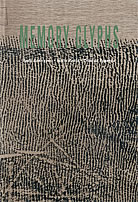
Memory Glyphs is a strange collection, no doubt, if only because the
primary connection between the three poets is a formal one: the prose poem. ... Together, these writers provie the uninitiated
with a sampler of Romanian voices—and provides those who follow Eastern and Central European poetry with some great
discoveries.
|
— Sentence: A Journal of Prose Poetics
|
Calling himself "Cristi" and grouping his texts under the title The Popescu Art, the author evokes his own family (or perhaps a fictional extrapolation of it) and
lets members speak about him through dramatic prose monologues. The genuine theme is his own self, its paradoxes and prevarications, but also its ingenuous aspirations. ... A fragmentary history of
family interaction and especially a "portrait of the artist as a young man" thus take shape as one piece leads to the next, while the main character remains so unabashedly self-centered (Popescu
was actually schizophrenic) and gleefully boastful that he continues to be interesting despite, or, in a sense, beyond the limits usually restraining our full appreciation of cynosure narrators.
Against all literary odds, the narrator becomes a kind of Romanian Everyman-individualist, even if he borders on solipsism. The poetic prose texts also suggest how and why they were themselves
engendered.
|
— John Taylor, The Antioch Review
|
Paradoxically, although Romania is a very Francophile culture, and Romanian is the only Romance language in that part of the world, what we could call the "Romanian prose poem" is less influenced
by the French tradition of the prose poem, its beginnings being closer to various forms of journalism (lyrical or satirical)—still practiced in Romania, where the most common profession among
writers is that of journalist.
|
— Daniela Hurezanu, Three Percent
|
In his brief but illuminating translator's preface to the work of three Romanian poets born in the 1960s, Adam J. Sorkin describes prose poems as "a formless form, oxymoronic, with
both lightness and heft, a chiseled, lapidary, elliptical poetry" that, according to Radu Andriescu, is "an abnormal mode of writing, marginal, irrelevant, and bookish." But anyone interested in the form
or simply in challenging and sometimes brilliant writing will see through this false modesty. |
— Robert Murray Davis, World Literature Today
|
If you thought that Romanian only comes into the spotlight when they usher forth their teenage uber-gymnasts during every summer Olympics, well, you're missing some
seriously innovative literature. |
— Salonica
|
A wildly roving narrative sensibility and the ability to render surreal images with poignancy and humor is a shared distinction in the work of these three poets,
whose singular achievements and stylistic idiosyncrasies make Memory Glyphs a strange compound of elements, at once playful, confounding, inspiring and ultimately serious. ... Each poet ...
takes his own path though darkness, humor, love, and mystery, and none is ashamed of groping aimlessly forward. The result is an unsettling pleasure, a collection of poems that grapple
with our deepest questions, if only by representing the whims and cluttered wills of their authors. |
— Stephan Delbos, Rain Taxi
|
Memory Glyphs makes a strong case for Romania's contribution to the evolution of the prose poem in the last few decades. ... In its diffuse nature, the prose
poem demands both a poem and a theory of poetry. The three poets in Memory Glyphs may have little in common besides their Romanian heritage and the fact that they have individually mastered a form that
few others have been brave enough to take on. For this reason, Memory Glyphs serves as an important addition to international poetics. |
— 3:AM Magazine
|